
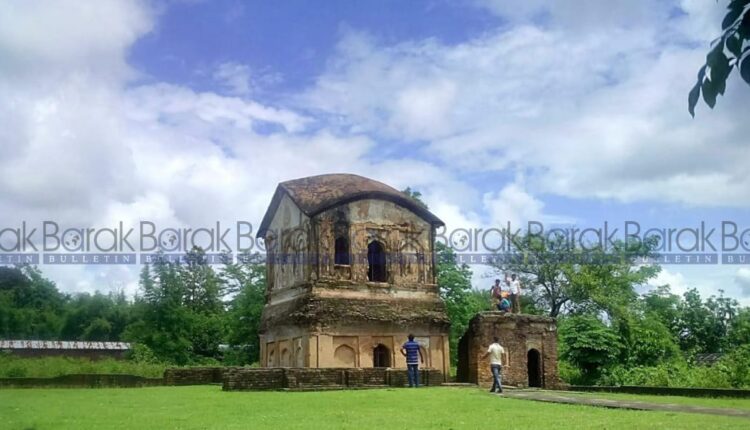

Many people in Silchar have visited the ruins of Khaspur, the former seat of a Dimasa kingdom that once ruled much of present-day Barak Valley. They have walked through its gateways, seen the remains of old structures and heard stories of kings who ruled from here. Yet the ruins preserve more than the history of a lost kingdom. They tell the story of a centuries-old bond between the Dimasa and Bengali communities that helped shape the region. Even before a visitor learns the history of Khaspur, the ruins offer clues of their own. Historians have pointed to architectural features influenced by Bengal’s traditional Chala style, known for its distinctive sloping roof design. It is one of many signs of the cultural exchanges that developed between the two communities over generations.
Speaking to Barak Bulletin, noted author and researcher Dr Tanmay Bhattacharjee shared insights into this long and often overlooked relationship. Dr Bhattacharjee has written extensively on the history and society of the Dimasas. His 2022 book Revisiting Dima Hasao: In Search of a Rhythm explores various aspects of life in Dima Hasao, Assam’s only entirely hill district, and highlights how indigenous tribal communities and non-tribal groups have lived together for generations despite receiving relatively little academic attention.
According to Dr Bhattacharjee, the relationship between the Dimasas and Bengalis stretches back around 300 to 400 years. The connection began long before Khaspur became the capital of the Dimasa kingdom and continued long after the kingdom itself disappeared.
The roots of this relationship can be traced to Maibong, the earlier capital of the Dimasa rulers. During this period, Dimasa kings invited Bengali Brahmans to their court to perform religious ceremonies and advise the kingdom on matters of tradition and governance. Over time, these Brahmans became closely associated with the royal administration. They wrote manuscripts, conducted rituals and played an important role in the kingdom’s cultural life.
The Dimasa kings established a highly influential institutional office called the Dharmadhi (often referred to as the Rajpandit or spiritual guide). The Dharmadhi was almost always a Bengali Brahman. Far from just handling temple rituals, he served as a principal counselor to the king and acted as the chief interpreter of Hindu law, heavily influencing state policy, legal codes, and royal legitimacy.
It was this office that formally linked the Dimasa rulers to the Mahabharata, declaring them descendants of Bhima and Hidimba (via their son Ghatotkacha), which elevated the tribal chieftainship to a divine Hindu monarchy.
When the Dimasa capital later shifted from Maibong to Khaspur in the plains of Cachar, these ties grew stronger. Bengali became an important language of administration and Bengali script was used in royal records, land documents and official matters. According to Dr. Bhattacharjee, this was not merely a political arrangement but part of a deeper cultural relationship that evolved over generations.
The influence extended beyond administration and religion. According to Dr. Bhattacharjee, many Dimasas of Cachar adopted customs through centuries of close interaction with Bengali society. This long-standing cultural exchange ultimately led to the unique Barman identity of the Dimasas from Cachar. Elements of wedding ceremonies, social traditions, and everyday cultural practices reflected this exchange. The relationship was not limited to royal courts but became part of village life and community interactions across the kingdom.
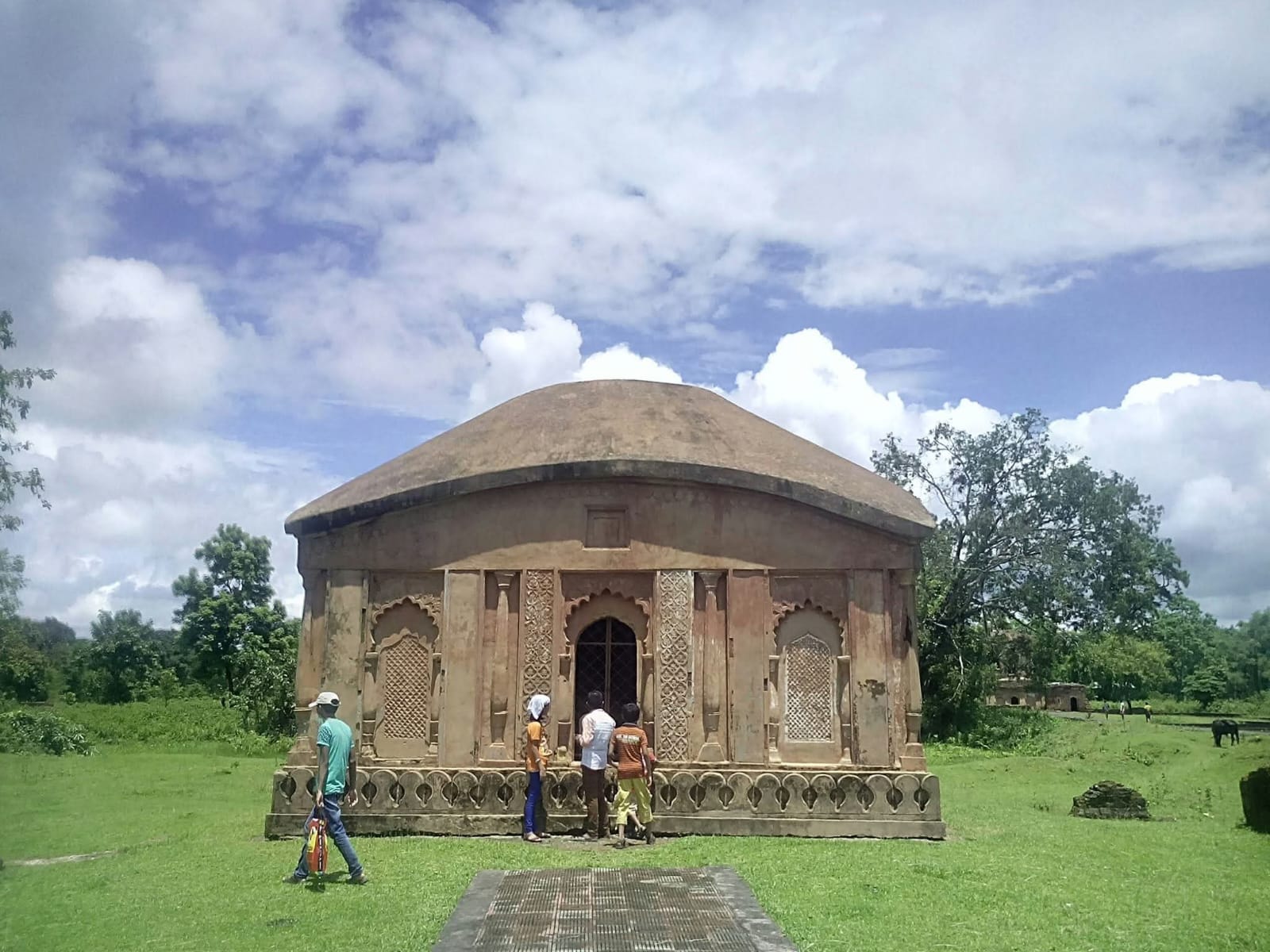
Some traces of this history remain visible at Khaspur today. The Ranachandi temple continues to stand at the site, while historical records show the use of Bengali script in royal administration. Historians have also noted architectural features influenced by Bengal’s traditional Chala style. These surviving records and structures offer insights into the cultural influences present during the period of Dimasa rule.
The rise of Khaspur itself came during a turbulent period in Dimasa history. For centuries, the Dimasa kingdom had been engaged in conflict with the Ahom kingdom, whose repeated attacks on Maibong forced the rulers to look southward. The move to the plains was ultimately sealed by a strategic royal alliance: the marriage of Dimasa Prince Laxmichandra to Princess Kanchani, the only daughter of the last Koch ruler of Khaspur. When the Koch king passed away without a male heir, the two realms merged, and the Dimasa capital shifted to the plains of Khaspur around the middle of the eighteenth century. While the move reduced pressure from the Ahoms, the kingdom later faced threats from Manipuri forces as well.
Despite these challenges, Khaspur remained the centre of Dimasa rule for nearly nine decades. The sovereign kingdom effectively came to an end with the assassination of its last ruler, Raja Gobinda Chandra, in April 1830. Following a brief period of geopolitical limbo, the British formally annexed Cachar under the Doctrine of Lapse in August 1832. Administrative centres later shifted elsewhere, and the old capital at Khaspur gradually faded from public attention.
Today, a Rs. 100-crore heritage preservation project by the Assam Government aims to revamp and restore the historic site. While restoration work may protect its structures, Dr. Bhattacharjee says the significance of Khaspur goes beyond its monuments. The ruins preserve the memory of a period when cultural exchange helped shape the identity of the region.
The political landscape of Barak Valley has changed considerably over time. The close cultural interactions that once characterised relations between many Dimasa and Bengali communities may no longer occupy the same place in public life. Younger generations may not always share the same languages, customs or experiences as their ancestors. Yet the historical connection remains visible in shared traditions, places of worship and records left behind by the kingdom.
More than the ruins of a former capital, Khaspur stands as a reminder of a shared past. Its story is not only the story of Dimasa kings and lost kingdoms, but also of a relationship between communities that helped shape the Barak Valley known today.
Research and reporting assistance by Shreeja Dey
Comments are closed.